Check Out The Latest Blog Posts To Learn More
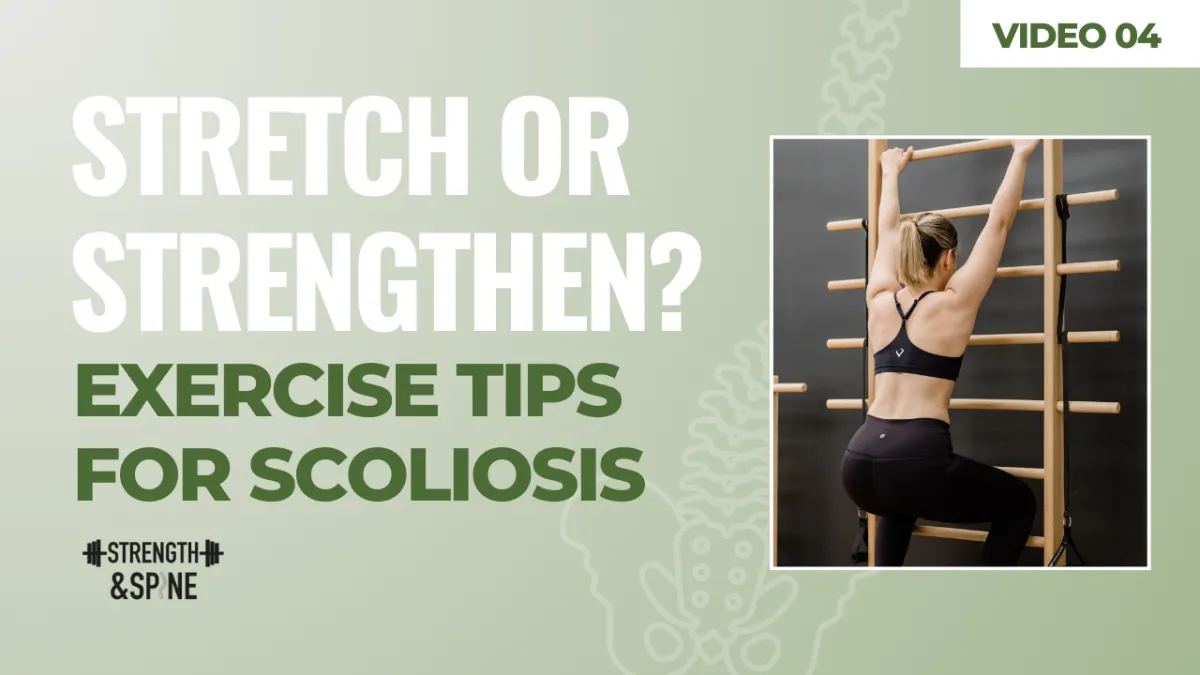
Stretch and Strengthen: How to Know What Your Scoliosis Needs | Strength and Spine
If you have scoliosis and you’ve ever wondered, “Am I stretching the right things?” or “Should I actually be strengthening instead?” – you’re not alone. This is one of the most common questions I hear from people trying to build an effective exercise routine to both stretch and strengthen with scoliosis.
I’m a scoliosis specialist physical therapist and someone living with scoliosis myself, and in this episode, I’ll break down how to decide when to prioritize scoliosis stretches and when strengthening should take the lead. The key starts with understanding the difference between passive range of motion and active range of motion… and learning how to test them yourself.
How to Stretch and Strengthen: Not Every Muscle Needs Stretching
If you want to both stretch and strengthen, it’s important to know that not every muscle benefits from being stretched. In fact, stretching the wrong muscles (or stretching muscles that already have enough flexibility) can waste time and sometimes even make symptoms worse.
That’s why it’s so important to be intentional with scoliosis stretches rather than taking a “stretch everything” approach.
To do that, you first need to understand how your body moves.
What’s Passive Range of Motion?
Passive range of motion refers to how far a muscle can move with help – meaning you’re not using your own strength to get there. An example would be using a strap to stretch your hamstrings, or pulling your leg toward your chest with your hands.
There are two things that determine your passive range of motion. First is the physical length of the muscle. Some people naturally have longer, more flexible muscles, while others have shorter muscles that feel tight more easily. The good news is that consistent passive stretching can actually increase muscle length over time.
Second is the nervous system. Your brain plays a huge role in limiting how far a muscle will stretch. When you feel that “pull” during a stretch, that’s often your nervous system stepping in to protect the muscle – even if the muscle itself could physically go further.
This is why people often have more motion under anesthesia (when the brain isn’t sending protective signals) than they do when stretching on their own.
What’s Active Range of Motion?
Active range of motion is how far you can move a joint using your own strength, without straps, hands, or outside help.
For example, lifting your leg toward your chest using only your muscles relies on the strength of the muscles on the front of your hip and thigh. Active range of motion tells us whether your muscles are strong enough to control the flexibility you already have.
Why This Matters for Scoliosis
When it comes to scoliosis stretches, flexibility alone isn’t the goal. What really matters is whether your body can use and support the range of motion you have.
If you already have enough passive range of motion for a muscle, adding more stretching may not help. In those cases, strengthening is often the missing piece, helping stabilize your spine and support better alignment.
Understanding the balance between active and passive range of motion allows you to focus your time on what actually needs work and build a more efficient, customized scoliosis routine.
How to Test Your Range of Motion at Home
Let’s talk through an example of testing your range of motion at home using your hamstrings.
First, test the passive range of motion. Lie on your back and use a strap or your hands to lift one leg. Ideally, most people should be able to reach somewhere between 70 and 90 degrees.
If you can’t reach that range passively, your hamstrings likely need more stretching.
If you can, now test active range of motion. Remove the strap and lift your leg using only your muscles. If your active motion matches your passive motion, great – you have both flexibility and strength.
If your active motion falls short, it’s a sign that strengthening (especially the hip flexors and quadriceps) should be prioritized. This same logic can be applied to other muscle groups throughout the body.
When to Stretch and When to Strengthen
If you have a limited passive range of motion, prioritize stretching. If you have good passive range but limited active range, prioritize strengthening.
Are both your active and passive range adequate? You likely don’t need more mobility work there. Focus on general strength or other areas instead.
This method helps you avoid spending time on scoliosis stretches that aren’t necessary while ensuring that weaker areas get the support they need.
How to Stretch and Strengthen with Scoliosis
One of the biggest benefits of this method is efficiency. When you know which muscles truly need stretching and which need strengthening, your routine becomes more targeted and more effective.
This is how we help clients customize their programs, and it’s a core part of our Stretching With Scoliosis course. The goal is to improve mobility and stability without guessing or overdoing things that don’t serve your body.

WE ARE
Strong with Scoliosis
Start today on an exercise program that helps you become empowered, strong, and confident in your scoliosis curve.
FIND US
Strength and Spine
Online Sessions and Coaching
We work with clients all over the world
*Please contact us for in-person appointments*