
Check Out The Latest Blog Posts To Learn More
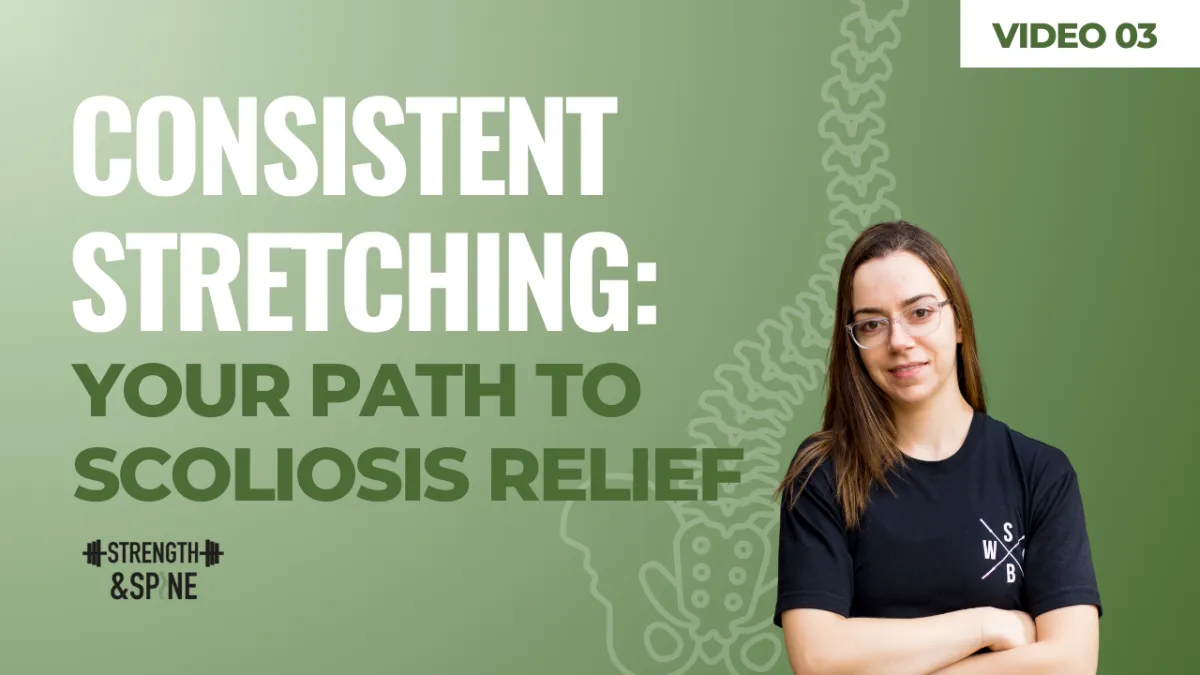
How to Be Consistent with Scoliosis Stretches | Strength and Spine
If you’ve ever started a stretching routine for scoliosis, felt motivated for a week or two, and then slowly lost momentum, you’re not alone. This is something I see all the time in my work with clients, and it’s exactly why consistency (not intensity) is the real key to progress.
I’m a scoliosis specialist physical therapist (and someone with scoliosis myself), and in this episode of Strength and Spine, I’m breaking down how to stay consistent with scoliosis stretches, how to tell if your routine is actually working, and how to know when it’s time to add strengthening to support your spine long-term.
Why Consistency Matters More Than Intensity
One of the biggest mistakes people make with scoliosis stretches is thinking they need a long, complicated routine to see results. In reality, even the best exercise program won’t help if you’re not doing it consistently.
Many of my clients see meaningful improvements with routines as short as 10–15 minutes, as long as they do them regularly. On the flip side, a perfect plan that never gets done won’t move the needle at all.
How to Stay Consistent with Scoliosis Stretches
Here are three tips to stay more consistent with your scoliosis stretches:
1. Start Small
If stretching feels overwhelming or hard to fit into your day, start small. Begin with just five minutes of scoliosis stretches per day.
That might be one or two elongation-based stretches, no equipment required. Five minutes is approachable, realistic, and much easier to repeat daily. Once that habit is in place, you can always build from there.
2. Pair Your Stretches With Habits You Already Have
One of the easiest ways to stay consistent with scoliosis stretches is to pair them with a habit you already do every day. This removes the mental effort of deciding when to stretch.
For example, you can stretch right after brushing your teeth, while waiting for food to cook, during your lunch break, or between meetings at work. When stretching becomes part of an existing routine, it’s much more likely to stick.
3. Track Your Progress
Tracking your consistency can be surprisingly powerful. Whether it’s a checklist, a planner, or an app, seeing those checkmarks adds motivation and accountability.
Many of my clients love being able to check off their exercises. It creates a sense of accomplishment and reinforces the habit. Sometimes, simply seeing how consistent you’ve been can be the push you need to keep going!
If you feel way too busy to add in scoliosis stretches, try to schedule stretching like an appointment. If it’s on your calendar, treat it with the same respect as any other commitment.
How to Know If Your Scoliosis Stretches Are Working
One of the most common frustrations I hear is, “I’m stretching, but I don’t know if it’s helping.” The truth is, progress with scoliosis can be subtle.
Instead of asking whether your pain is completely gone, look for these signs:
Less stiffness over time: Maybe you used to feel tension after standing for 10 minutes, and now it takes 15. That’s progress!
Improved posture or alignment: You might not notice this right away, but friends or family might comment that you’re standing taller or moving differently.
Greater awareness of your alignment: Many people begin to recognize when they’re leaning into their curve and instinctively correct it using elongation techniques throughout the day.
Some people choose to take progress photos of their back over time, though this is very personal and should only be done if it feels emotionally safe and helpful.
When to Add Strengthening to Your Routine
Stretching alone can be incredibly beneficial, but for most people, it’s only part of the solution.
Once you’ve been consistent with scoliosis stretches for a few weeks and you’re noticing improvements in flexibility, posture, or awareness, it may be time to add strengthening. Strength training helps your body hold onto the alignment and mobility you’ve created through stretching.
Some signs you’re ready to strengthen:
You’ve been consistent with stretching for several weeks
Your flexibility feels more balanced side to side
You’re no longer feeling a strong stretch sensation
You want more long-term stability and support
Without strengthening, muscles often revert back to old patterns, which can undo the progress you worked so hard to make.
Get Consistent with Your Scoliosis Stretches
Guided courses and programs that teach you how to assess your own mobility can be so valuable; you’re no longer guessing what to stretch or how often.
If you’re not sure where to stretch or how to get started, check out our Stretching with Scoliosis Course. It has an entire library of tests you can perform on yourself to determine which areas need strengthening and attention.

WE ARE
Strong with Scoliosis
Start today on an exercise program that helps you become empowered, strong, and confident in your scoliosis curve.
FIND US
Strength and Spine
Online Sessions and Coaching
We work with clients all over the world
*Please contact us for in-person appointments*